
Gift-Giving Do's and Don'ts in International Business: A World Guide
The number, color, or object that reads as thoughtful in one country can read as a funeral reference in another — a practical guide to the taboos that actually matter.
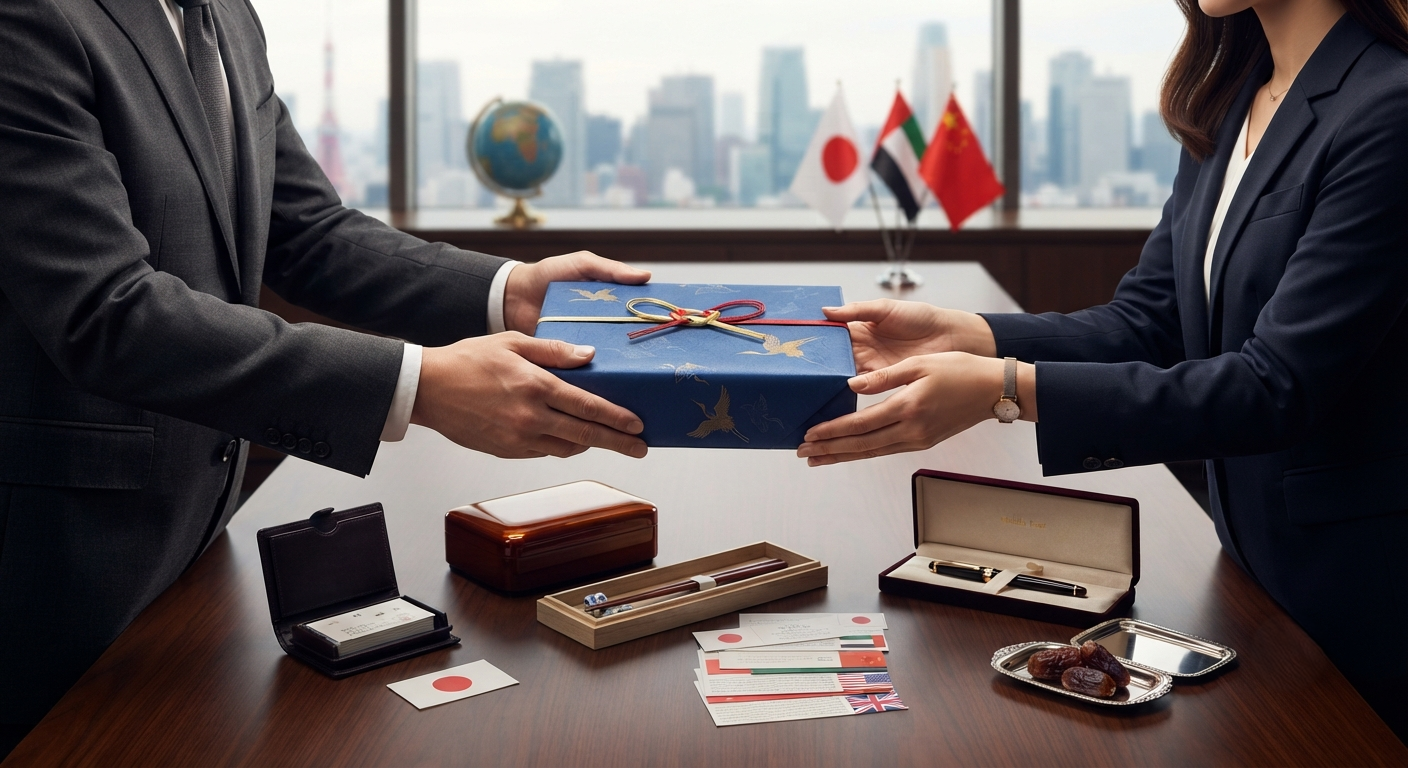
The number, color, or object that reads as thoughtful in one country can read as a funeral reference in another — a practical guide to the taboos that actually matter.
Key Takeaways
- The number four carries a death association across much of East Asia (Japan, South Korea, China) because it sounds like the word for "death" in each language — avoid gifts in sets of four in all three.
- Certain flowers and colors carry funeral associations in specific countries — chrysanthemums in France and Italy, marigolds in Mexico, white or black gift wrap in Nigeria — none of which are obvious to a visitor without knowing the local context.
- The bigger current shift to know: in China, the anti-corruption environment has made lavish gifts genuinely risky, not just old-fashioned — this is one of the most commonly outdated pieces of advice still circulating.
Why gift-giving taboos are worth learning specifically, not generally
A well-intentioned gift, chosen with real thoughtfulness, can still land badly if it happens to hit a taboo the giver never knew existed. These taboos aren't random superstition to a local recipient — they're often tied to real linguistic or cultural associations (a number that sounds like another word, a flower used specifically at funerals) that carry genuine emotional weight. This guide organizes the recurring patterns by category — numbers, colors, and objects — rather than repeating a country list, since the same handful of taboos recur across multiple countries in this series.
Numbers That Carry Death Associations
The most widespread taboo in this entire guide: the number four. In Japanese, Korean, and Chinese, the word for "four" sounds similar to the word for "death" in each respective language — a linguistic coincidence with real cultural weight. Avoid gifts in sets of four in Japan, South Korea, and China specifically, as covered in each of our individual country guides.
Beyond four, even numbers of flowers specifically (rather than gifts generally) carry a mild negative association in several countries, including Mexico and parts of Europe — an odd number is the generally safer default when flowers are the gift.
Flowers and Colors With Funeral Associations
This is where a well-meaning visitor most often gets tripped up, because the specific flower or color varies by country and isn't something a general "flowers are always nice" instinct would catch:
- Chrysanthemums are strongly associated with funerals in both France and Italy — avoid them as a gift in either country.
- Marigolds carry a similar funeral and Día de los Muertos association in Mexico.
- White or black gift wrapping carries mourning associations in Nigeria — brighter, more festive wrapping is the safer choice there.
- Purple or black items generally can carry funeral associations in Brazil.
- Red ink should never be used to write a name in South Korea (and more broadly across parts of East Asia), since it's historically associated with recording the deceased.
Objects to Avoid Regardless of Country
A smaller set of specific objects carry negative symbolism widely enough to be worth avoiding as a general default, even outside the specific countries where we've flagged them directly:
- Clocks are specifically associated with death in Chinese culture — avoid them as a gift there entirely.
- Sharp objects — knives, scissors — symbolize "cutting" or severing a relationship in both Chinese and Brazilian gift-giving customs, and are best avoided as gifts in either.
- Alcohol is a safer default in most Western business cultures but is a genuinely risky choice as a default gift in India, given the country's religious diversity and the significant share of the population that doesn't drink for religious or personal reasons.
- Beef products should be avoided as a food gift in India for the same reason, given Hindu dietary customs.
The China Shift: Why Older Advice Is Now Actively Wrong
This deserves its own section because it's a genuine, significant change rather than a static taboo. A sustained government anti-corruption campaign in China over roughly the past decade has made lavish, high-value business gifts something to actively avoid, not simply an old-fashioned nicety to skip. A gift that once signaled generosity can now be misread as an attempted bribe, particularly with government-linked or state-owned enterprise contacts. Modest, clearly company-to-company gifts are the current safe standard, a genuine departure from older etiquette advice still circulating widely online. Full detail in our China guide.
The Ritual of Polite Refusal
In several East Asian cultures, particularly South Korea and China, it's completely normal for a gift to be politely declined once or twice before being accepted — this is a social ritual, not genuine reluctance, and the giver is expected to insist gently rather than withdraw the offer. Visitors unfamiliar with this pattern sometimes withdraw a gift after a single polite refusal, which can come across as insincere rather than respectful.
Hand Etiquette When Giving and Receiving
Across much of this series — Nigeria, India, the UAE, Saudi Arabia — giving or receiving anything, including a gift, with the left hand alone is considered impolite, tied to the hand's association with personal hygiene in these cultures. Use the right hand or both hands together as the safer universal default whenever this taboo might apply.
Common Mistakes to Avoid
- Giving a gift in a set of four in Japan, South Korea, or China.
- Bringing chrysanthemums to a business meeting in France or Italy, or marigolds in Mexico.
- Withdrawing a gift after one polite refusal in South Korea or China, rather than insisting gently.
- Bringing an expensive gift to China based on outdated advice that predates the anti-corruption crackdown.
- Defaulting to alcohol as a gift in India without considering the recipient's likely preferences.
- Using the left hand alone to give a gift in Nigeria, India, or the Gulf countries.
Frequently Asked Questions
Why is the number four considered unlucky in East Asian business gifts?
In Japanese, Korean, and Chinese, the word for "four" sounds similar to the word for "death" in each language — a linguistic association that makes gifts in sets of four inappropriate across all three cultures.
Is it still appropriate to give an expensive gift in Chinese business culture?
No — this is one of the most significant changes in this guide. China's sustained anti-corruption campaign has made lavish gifts genuinely risky, and modest, company-to-company gifts are now the safer standard.
Why would someone refuse a gift before accepting it?
In South Korea and China particularly, a polite initial refusal is a normal social ritual, not genuine reluctance. The giver is expected to insist gently rather than withdrawing the gift after the first decline.
For full country-specific gift-giving detail, see our individual country guides linked throughout this article.
Continue with related WorldDepth guides
Related articles
Cross-Cultural Deep Dives • Cross Cultural Deep Dive
Business Dining Etiquette Around the World: What to Know Before the Meal
Who pays, who orders first, and why rushing the meal is a mistake almost everywhere except two countries in this entire guide.

Cross-Cultural Deep Dives • Cross Cultural Deep Dive
How Direct or Indirect Is Business Communication in Your Target Country?
A practical spectrum for calibrating how bluntly — or how carefully — you should expect disagreement, feedback, and refusal to be delivered before your next meeting abroad.
Cross-Cultural Deep Dives • Cross Cultural Deep Dive
Punctuality Norms Around the World: Where "On Time" Really Means On Time
On time" doesn't mean the same thing everywhere — a practical spectrum of what punctuality actually signals in different business cultures, without ranking any of them as better or worse.